Polish American Heritage Month, Pulaski, and the Neighbors
Polish American Heritage Month used to be held in August, and it moved for a very practical reason. Pulaski, Jamestown, and the shirts for the region.
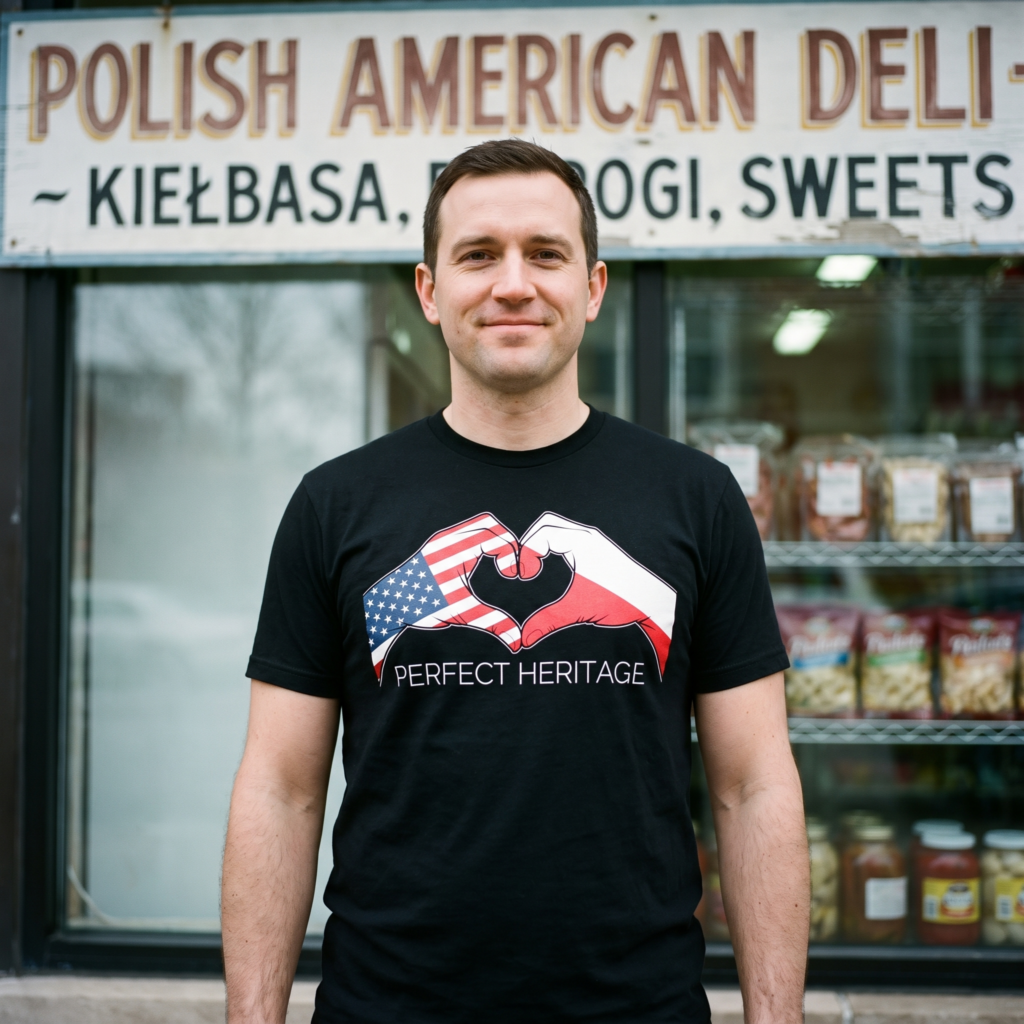
This one started as a local idea and grew into a federal proclamation, which is the usual direction. What is unusual is that it changed months along the way, for a refreshingly unsentimental reason.
Why October, and why it used to be August
Polish American Heritage Month was first held in 1981, organized by the Polish American Cultural Center in Philadelphia, and it ran in August. Congress designated August in 1984. Two years later it moved: House Joint Resolution 547 named October instead, and the proclamation was signed on October 13, 1986. The reason was practical: schools are in session in October and closed in August, so the month could be taught rather than merely declared. October also lines up with the arrival of the first Poles in America.
They landed at Jamestown on or about October 1, 1608, aboard the Mary and Margaret, brought over to make glass, pitch and tar because the colony needed exports and had none. In 1619 they put their tools down. The company court record of July 21 that year agreed that they be, in the spelling of the day, enfranchized and made as free as any inhabitant there whatsoever, and the following spring the record notes that they went back to work. It is one of the earliest labor disputes on the continent, and they won it.
In the 2020 Census, 8.6 million people reported Polish ancestry, with Illinois ahead of New York, Michigan and Pennsylvania. The Polish American Perfect Heritage Heart Tee keeps the flag as simple as the flag is: white above, red below, two bands and one edge, no crest and no eagle. Reversed it becomes another country entirely, which is the sort of thing a Polish grandmother spots from the far side of a room.
Pulaski
Casimir Pulaski was born in Warsaw in 1745 and had already fought a cavalry war against Russian influence in Poland before he met Benjamin Franklin in France in 1777. Franklin sent him across. He landed near Boston, and at Brandywine on September 11, 1777, he led a countercharge that covered a retreat. Congress commissioned him brigadier general and commander of the horse, and he presented his cavalry legion the following March. He was hit by grapeshot while rallying troops at the siege of Savannah on October 9, 1779, and died two days later. He is called the father of the American cavalry, and the title is not a courtesy.
In 1929 Congress designated October 11 as General Pulaski Memorial Day and asked the President to proclaim it each year. Every President since has done so, with one gap in 1930, which makes it one of the longest unbroken proclamations in the country. New York has run the Pulaski Day Parade up Fifth Avenue on the first Sunday in October since 1937. Illinois does it differently, marking Casimir Pulaski Day on the first Monday in March under a law passed in 1977, with the first observance in 1978. And in 2009 he was made an honorary citizen of the United States, 230 years late, one of a very short list.
Kocham cię
Polish has one sentence where several languages have two, and it works for a wife and for a grandmother without changing register. Said out loud it is closer to KOH-hahm cheh than the spelling suggests to an English speaker. The Kocham Cie, Polish I Love You Watercolor Tee prints it in white script across a painted heart, and leaves off the small hook under the final letter, deliberately, so that it stays readable to anyone whose keyboard never had one. The rest of the set is compared language by language in How to Say I Love You in Ten Languages.

The neighbors on the same rack
Poland is the largest of these communities in America but it is not alone. Nebraska has the highest share of Czech ancestry of any state, Wilber runs a Czech festival every year, and Texas holds its own belt of Czech towns. The Czech American Perfect Heritage Heart Tee gets the blue triangle on the correct side, which is what gets checked first.
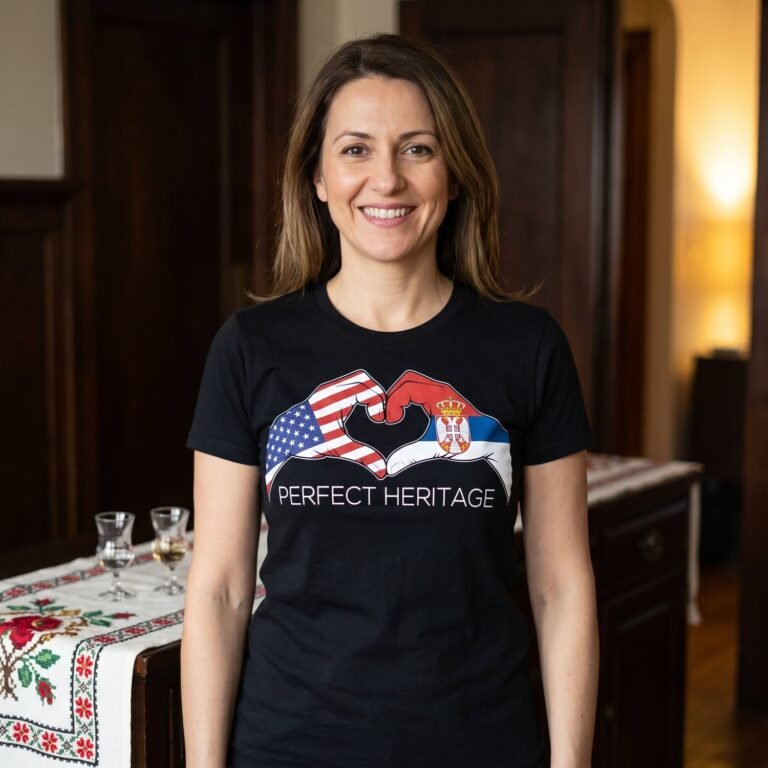
The largest Serbian community in the country is in and around Chicago. The slava, the feast of a family’s patron saint passed down the male line, was inscribed on the UNESCO intangible heritage list in 2014, and it is the day a Serbian American Perfect Heritage Heart Tee tends to get worn, crowned double eagle and all.
Cleveland was once nicknamed the American Debrecen, on the widely repeated belief that it held more Hungarians than any city but Budapest. The claim does not survive the arithmetic, but the Buckeye Road neighborhood really did hold some 35,000 Hungarians by the end of the 1930s. Hungarian folds the subject, the verb and the object into one word, which is why the Szeretlek, Hungarian I Love You Script Tee has nine letters and nothing else to add. Romanians settled in the same industrial cities, Cleveland, Detroit and Chicago, with about 12,000 in Cleveland alone by the First World War, and the Te Iubesc, Romanian I Love You Heart Tee is for them, pronounced teh yoo-BESK with the stress at the end. The heritage designs are in American Heritage Hearts and the language ones in Northern and Eastern Europe.
Questions people ask
When is Polish American Heritage Month?
All of October. It began in August in 1981, was designated by Congress in 1984, and moved to October in 1986 so schools could take part.
Is Pulaski Day the same everywhere?
No. General Pulaski Memorial Day is October 11 nationally, proclaimed by the President. New York parades on the first Sunday in October. Illinois marks Casimir Pulaski Day on the first Monday in March, which catches out anyone who moves there.
How do you pronounce kocham cię?
Roughly KOH-hahm cheh. The second word is the one English speakers get wrong, because the spelling suggests a hard consonant that is not there.