Why So Many American Nurses Are Filipino
It starts with schools the United States built inside another country, runs through a Cold War exchange program, and turns on one immigration law passed in 1965.
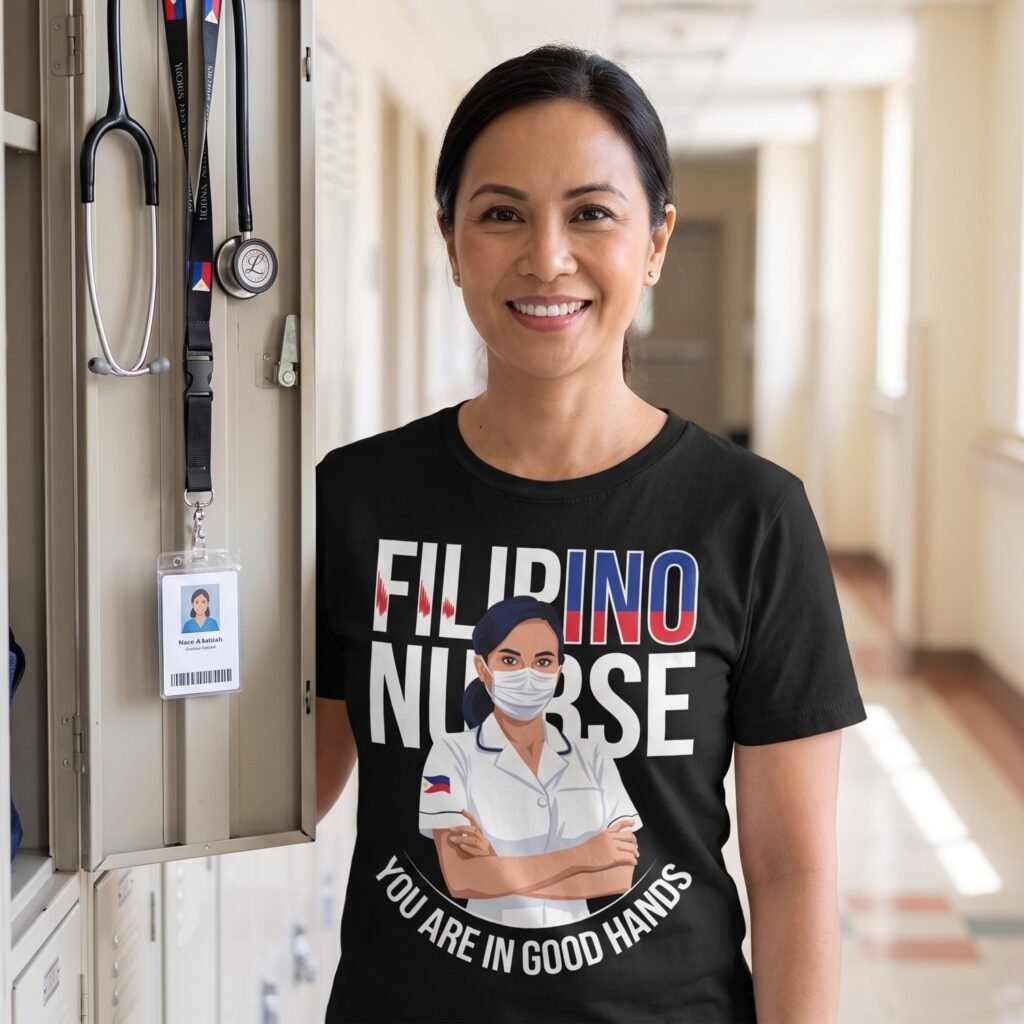
Walk onto almost any hospital floor in the United States and the odds are good that at least one nurse on shift was born in the Philippines or trained there. That is not a coincidence. It is the result of a school system one country built inside another, a visa program designed for something else, and a single law passed in 1965.
It starts with a school, not with a hospital
The United States took the Philippines from Spain in 1898 and administered the islands for the next half century, building institutions in its own image as it went. Nursing was one of them. A mission hospital in Iloilo opened a training school for nurses in 1906, the first in the country, and it is still running under a different name. Manila followed in 1907, with schools at Philippine General Hospital and Saint Paul’s Hospital.
What matters is less that the schools existed than how they taught. The curriculum followed an American model and the language of instruction was English. Not English as a subject on the timetable, but the language of the ward, the chart and the textbook.
That one decision is why a nurse trained in Manila could later walk onto a floor in Chicago and start work without a translator. Nobody designed it as an export pipeline. It became one anyway.
A two year visa nobody expected to be permanent
In 1948 the United States created the Exchange Visitor Program, which brought foreign professionals over to study and gain experience for a maximum of two years before going home again. It was an instrument of the early Cold War, meant to send people back with a favorable impression of the country.
American hospitals, short of nurses after the Second World War, used it as a recruiting channel instead. Filipino nurses arrived on two year terms, worked American floors and were expected to leave. A great many looked for ways not to, and the program produced a long argument about whether these were exchange visitors or employees.
The law that changed the shape of it
The Immigration and Nationality Act of 1965 ended the national origin quotas that had kept Asian immigration to a trickle and opened preference categories for occupations in short supply. Nurses already in the country on an exchange visa could petition to stay permanently. Nurses still in Manila could apply to come.
By 1967 the Philippines had become the largest single source of nurses entering the United States, and it has not given up that position since. An amendment in 1970 created the H-1 temporary worker visa, and for the years from 1972 to 1978 about sixty percent of the nurses who entered on it had been educated in the Philippines.
The totals are large. More than 150,000 Filipino nurses have migrated to the United States since 1960. By 2019, one registered nurse in twenty in the country had trained in the Philippines.
One number from the pandemic, and a caution about it
In a report published in March 2021, the union National Nurses United found that Filipino nurses made up about 4 percent of registered nurses in the country and just over a quarter of the registered nurses it had recorded as dying of COVID-19 and related complications. The report itself was mostly an argument that no government agency was counting these deaths properly, and different tallies from that period give different figures. The disproportion is not in dispute. The precise number is an estimate and should be attributed to whoever made it.
Two shirts, two languages, one sentence
The shop draws this in two ways, and which one you want depends on who has to read it. The Filipino Nurse You Are in Good Hands T-Shirt sets FILIPINO NURSE in tall condensed capitals with the Philippine flag filling the last three letters of the first word, so the country cuts through the job title. The nurse drawn in front of the lettering has her arms folded and her gaze level. She is not a cartoon, she is done explaining herself, and the line curving underneath is a statement of fact, not a promise.
The Nurse Ako Tagalog Proud to Be Filipino T-Shirt says the same thing first in Tagalog. AKO is enormous, with the flag running through all three letters as one continuous shape, and the English line underneath is kept small in gold script, there for anyone who needs it and easy to skip for anyone who does not. Ako means I. Tagalog needs no verb between a pronoun and a noun, so nurse ako is a complete sentence in two words. The pair lives in Proud Filipino Nurse.
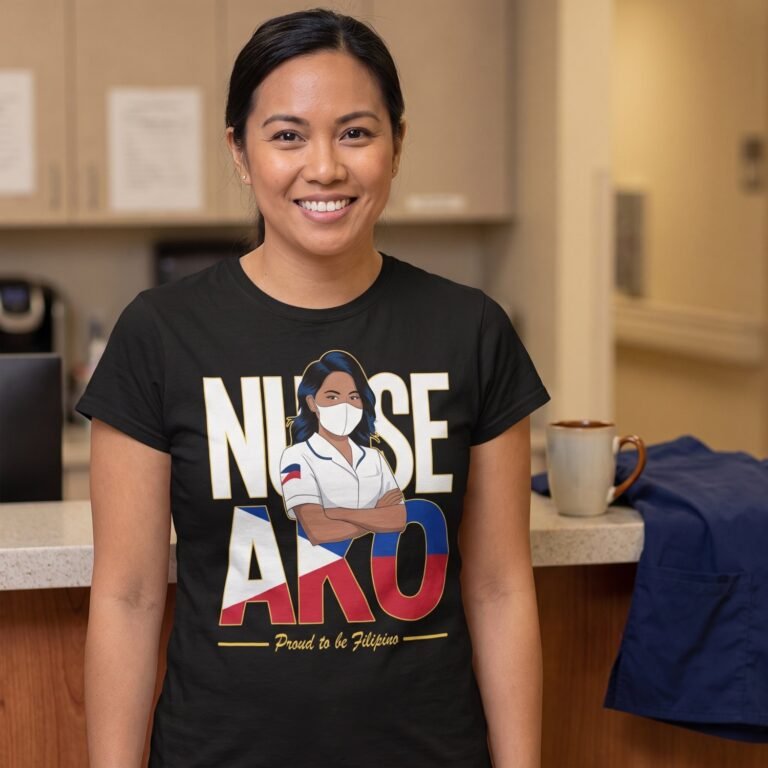
Away from the hospital, the same history shows up on the heritage designs. The Filipino American Perfect Heritage Heart Hands Tee puts one flag on each hand and leaves the heart between them empty. The United States and Philippines Two Hearts Map Tee draws the same idea as two maps with a dashed line arcing between them, one heart inland in the United States and the other on Luzon. The guide to Pasko and the ber months introduces nurse ako alongside the Christmas designs. Drawn here, printed and shipped by Amazon.
Questions people ask
Why are there so many Filipino nurses in the United States?
Because nursing was taught in the Philippines in English, on an American curriculum, from the first decade of American rule. Postwar hospital shortages then pulled on that supply through the Exchange Visitor Program, and the 1965 immigration law let the arrangement become permanent.
What does nurse ako mean?
I am a nurse. Ako means I, and Tagalog does not need a verb to link it to a noun, so the two words are already a finished sentence.
Which came first, the schools or the migration?
The schools, by about forty years. The first training school opened in 1906. The large movement of nurses to the United States did not begin until after the Second World War.