How to Say I Love You in Ten Languages
Ten ways to say the same three words, and the differences between them are not small. Some languages hand the sentence over lightly. Others keep it for the moment that deserves it. Here is what each one actually carries, and the shirt that prints it.
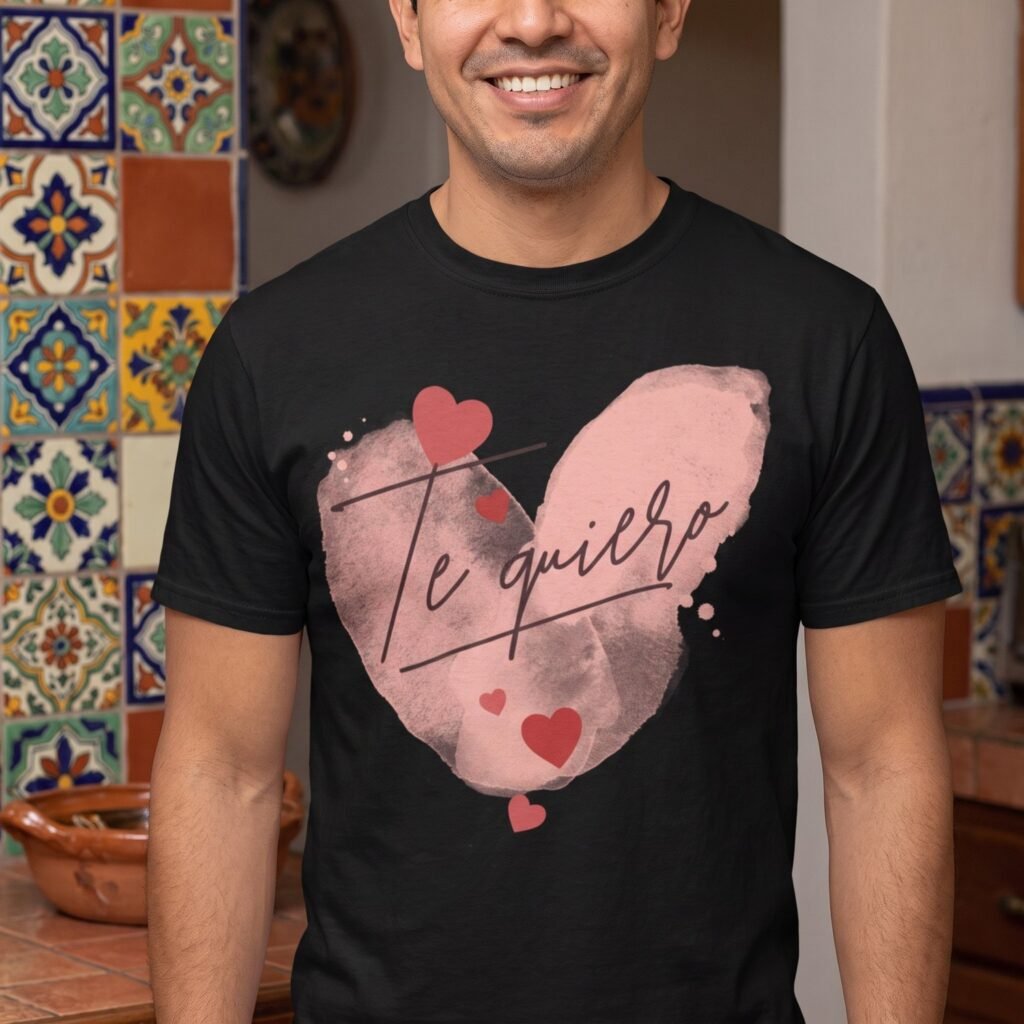
Te quiero, Spanish
Spanish has two, and choosing the wrong one is the classic mistake. Te quiero is the everyday one: family, close friends, someone you have been with a while. Te amo is the heavy one, and it is not easily taken back. The shirt prints the one you can wear on a Tuesday.
Te Quiero, Spanish I Love You Watercolor Tee
Ti amo, Italian
Italian splits it the other way round. Ti amo is reserved for a partner, and saying it to a friend would land strangely. For everyone else there is ti voglio bene, which is warmer than it looks: it means something closer to I hold you dear.
Ti Amo, Italian I Love You Watercolor Tee

Je t’aime, French
French does the whole job with one phrase and lets tone do the rest. The same three words go to a partner, a child and a grandmother, and nobody is confused. Add bien and you weaken it, which surprises people who expect the opposite.
Je T’aime, Elegant French I Love You Script Tee

Ich liebe dich, German
Germans do not hand this one out. It is said rarely and it is meant completely, and the lighter ich hab dich lieb covers what other languages would call the same thing. Printing the full sentence is a statement, not a decoration.
Ich Liebe Dich, German Watercolor Heart Tee

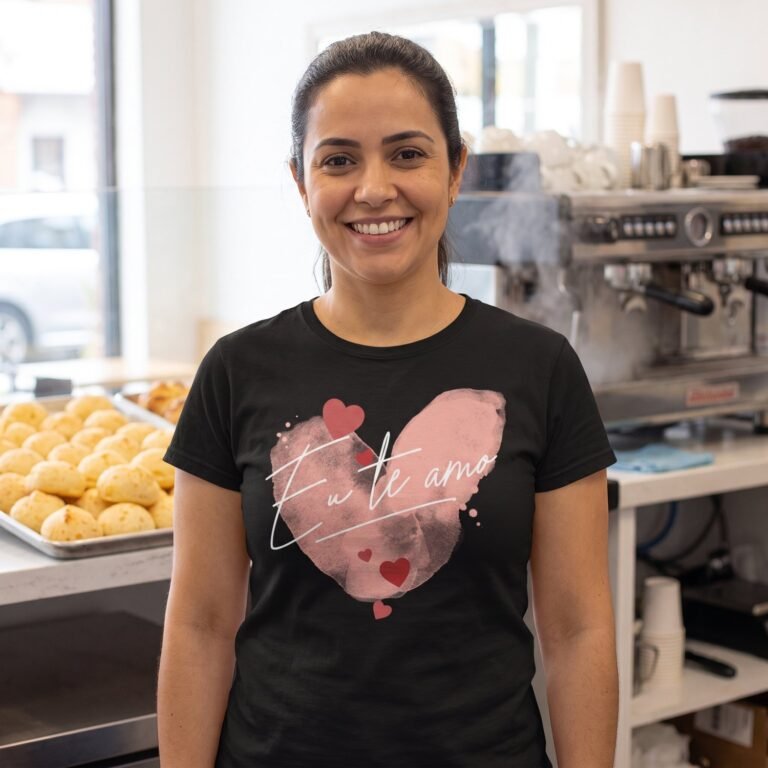
Eu te amo, Portuguese
This is the Brazilian word order, and it is the one most people know. In Portugal you will more often hear amo-te, with the pronoun attached to the verb. Same sentence, different grammar, and the shirt prints the Brazilian one.
Eu Te Amo, Portuguese I Love You Heart Tee
Mahal kita, Tagalog
Two words, and the second one is the trick: kita means I to you, both people at once, so the sentence has no separate word for I or for you. It cannot be said about anyone else. It only works between the two people standing there.
Mahal Kita Elegant Filipino Love T-Shirt and Mahal Kita Always, Pinoy I Love You Brush Tee
Kocham cię, Polish
One of the few that works for a partner and for a grandmother without changing register, which is rarer than it sounds. Said out loud it is closer to KOH-hahm cheh than to what the spelling suggests to an English speaker.
Kocham Cie, Polish I Love You Watercolor Tee
Szeretlek, Hungarian
One word, and it contains the whole sentence. Hungarian folds the subject and the object into the verb, so szeretlek already means I love you with nothing left to add. There is no shorter way to say it in any language on this page.
Szeretlek, Hungarian I Love You Script Tee
Te iubesc, Romanian
The pronunciation is half the gift here, because the spelling misleads almost everyone: it is teh yoo-BESK, with the stress at the end. Get it right once and you will never be corrected again.
Te Iubesc, Romanian I Love You Heart Tee
Nakupenda, Swahili
Built out of three pieces stuck together: na for I, ku for you, penda for love. It is spoken across East Africa, from Kenya to Tanzania, and it travels further than most people expect.
Nakupenda, Swahili for I Love You Script Tee
Why these and not others
Ten languages, eleven shirts, because Tagalog gets two. The full set lives in Say I Love You, and it grows when a family asks for theirs.