National Pupusa Day, and the Food of Central America
El Salvador is one of the few countries to have written a recipe into law. A decree from 2005 made the pupusa the national dish and gave it a day of its own in November.
El Salvador is one of the few countries that has written a recipe into law. Legislative Decree 655, issued on April 1, 2005, declared the pupusa the national dish and set aside the second Sunday of November as the Día Nacional de la Pupusa. The date moves every year, which is why it is worth learning as a rule rather than as a number.
A dish with a contested name
Where the word comes from is genuinely unsettled, and anyone who sounds certain about it is picking a side. The Dictionary of Americanisms traces pupusa to the Nawat word puxahua, fluffy. Others have proposed pupusawa, to puff up. The Salvadoran linguist Jorge Lemus has argued that the word has no Nawat root at all and that Pipil speakers called the thing kukumuzin. The safe conclusion is that the pupusa is a good deal older than the argument about its name.
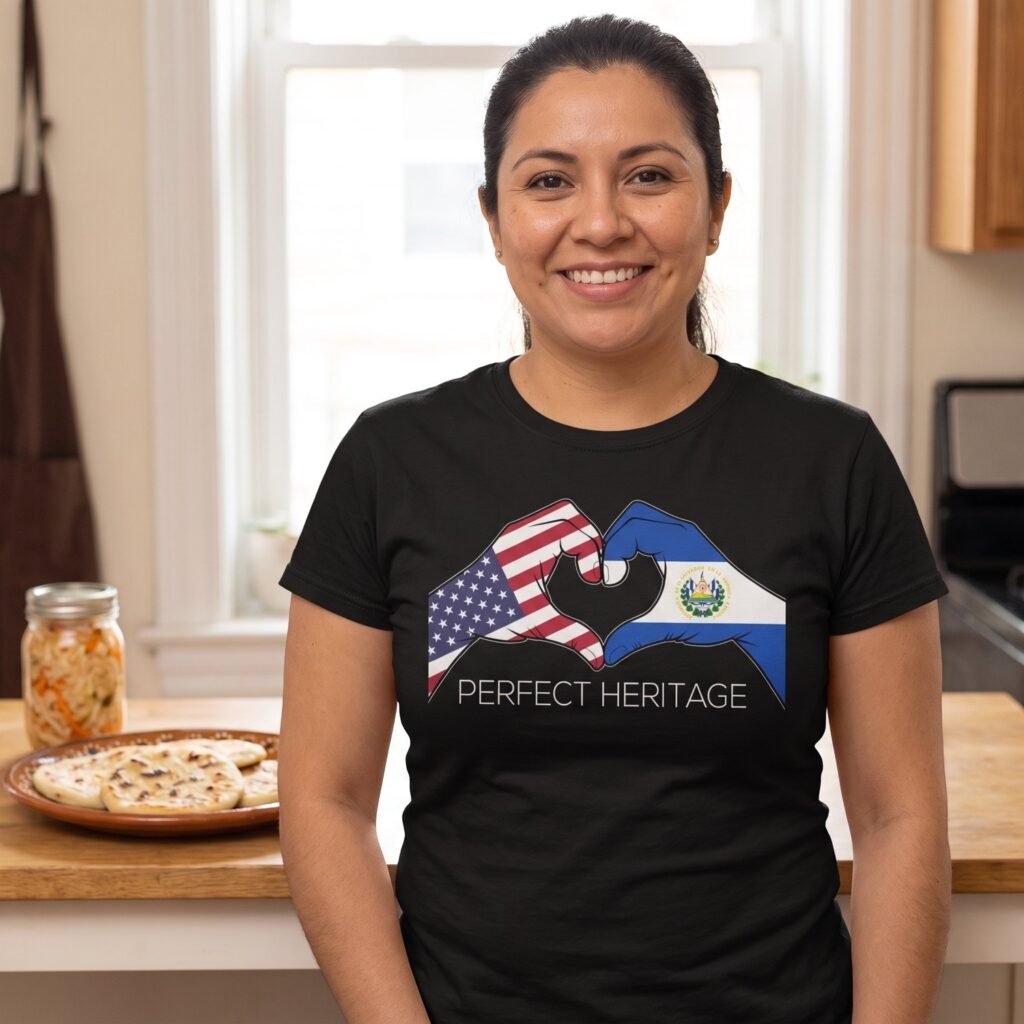
The Salvadoran American Perfect Heritage Heart Tee takes the same care with the flag that a good pupusera takes with the masa. The coat of arms, the triangle with its volcanoes and its rainbow, is drawn on the white band instead of approximated, and the blue is cobalt rather than sky blue, which is what tells it apart from Guatemala at ten feet.
What is actually inside one
A pupusa is a disc of corn masa stuffed before it is cooked, not after, then flattened between two palms and put on a griddle. The standard fillings are quesillo, refried beans, chicharrón, and the revuelta, which is all three at once. The fourth is loroco, and it is the one most people outside Central America have never met.
Loroco is Fernaldia pandurata, a climbing vine whose small unopened flower buds are eaten across El Salvador and Guatemala. They are aromatic and green-tasting, somewhere between asparagus and a mild broccoli, and they go into pupusas, rice, eggs and tamales.
Then there is the rice version. Corn ran short in the late 1930s and cooks in Olocuilta began making the masa from rice flour instead. Pupusas de arroz spread further during the civil war, and Olocuilta is now the town people drive to for them. Whatever the masa, two things arrive with the plate and neither is optional: curtido, the lightly fermented cabbage relish, and salsa roja. The Smithsonian Folklife Festival put it plainly in its own recipe, that curtido is always there, waiting on the table in a restaurant or handed over at a stand on the side of the road.
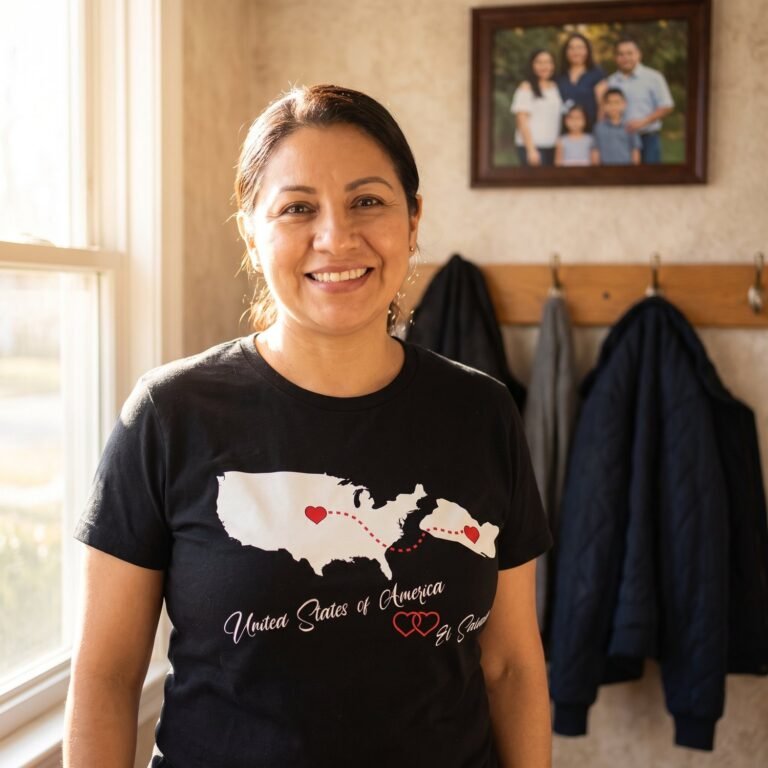
The USA and El Salvador, Two Hearts, One Line draws the country wide enough along its Pacific coast to actually read, which is the sort of thing anyone from a small country notices in the first two seconds.
The neighbors, briefly
Honduras has the baleada: a thick soft flour tortilla folded over mashed refried red beans, a thin white cream called mantequilla, and crumbled queso duro. That is the baleada sencilla, and everything after it is negotiable, eggs, avocado and plantain included. It is usually traced to the northern coast. The Honduran American Perfect Heritage Heart Tee lays the five stars of the flag across the back of the hand the way the flag does, four at the corners and one in the middle, which anyone from the country reads before they read the word Honduras. The USA and Honduras, Two Hearts on One Dotted Line carries no lettering at all, only two maps and the line between them.
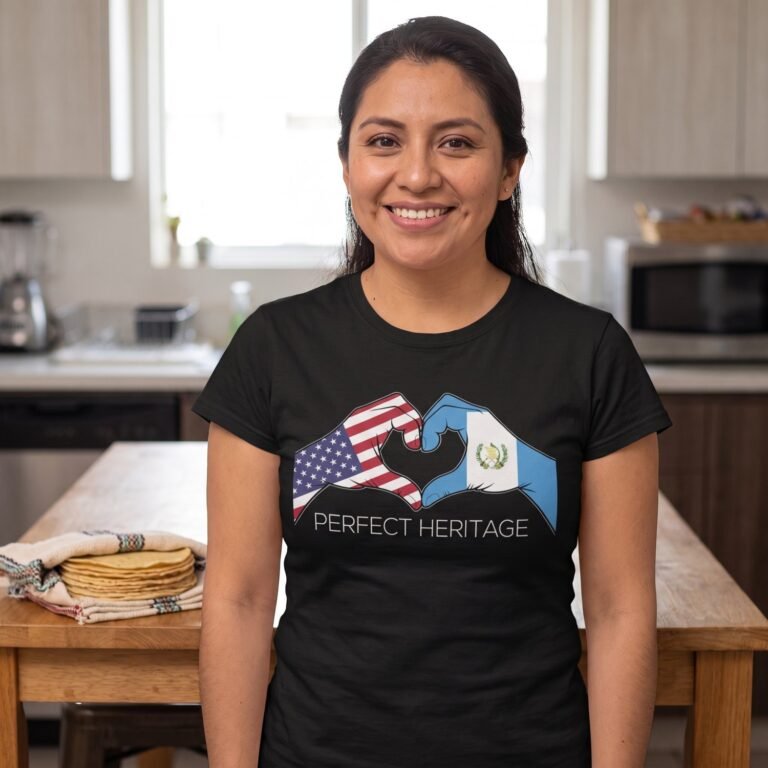
Guatemala went further than most countries in protecting its own table. In 2007 the Ministry of Culture and Sports declared four dishes intangible cultural heritage of the nation: pepián, jocón, kaq’ik and mole de plátano. Day to day, though, the thing people buy at ten in the morning is a chuchito, a small firm tamal wrapped in corn husk rather than banana leaf. The Guatemalan American Perfect Heritage Heart Tee was the first design in this series and set the rule the rest follow, which is that the heart in the middle is left empty so the shirt itself becomes the heart.
Central America at an American table
These are not small communities. Pew Research Center counted about 2.5 million people of Salvadoran origin in the United States in 2021, the third largest Hispanic origin group at the time, alongside roughly 1.8 million of Guatemalan origin and 1.1 million of Honduran origin. That is why a Sunday pupusería in Los Angeles, Houston or Long Island is a neighborhood institution rather than a novelty, and why the second Sunday of November gets marked at all this far north.
Both families of design live in American Heritage Hearts and Two Countries, One Heart, and the same countries appear in Hispanic Heritage Month, which begins on September 15 for a reason.
Questions people ask
When is National Pupusa Day?
The second Sunday of November. It was set by Legislative Decree 655 in 2005, the same decree that named the pupusa the national dish of El Salvador.
What is curtido?
A lightly fermented relish of shredded cabbage with carrot, onion and oregano in vinegar. It is served cold, it cuts the richness of the masa and the cheese, and it is not a garnish. A pupusa without it is unfinished.
What is a pupusa de arroz?
The same thing with rice flour in the masa instead of corn. It came out of a corn shortage in the late 1930s in Olocuilta and it stayed, and it crisps a little harder at the edges.